¶ dcr:dataProcessingType
The type dcr:dataProcessingType defines distinct categories of data transformations or analysis procedures needed in the data processing phase. Customers are provided with flexibility by enabling them to outline each specific procedure through a predefined list of options such as linearization, interpolation coefficient calculation, trend analysis, utilizing previous calibration data, among others. Additionally, supplementary details about each are provided via an optional description field.
¶ Tree structure
The tree structure of the type dcr:dataProcessingType has the following appearance:
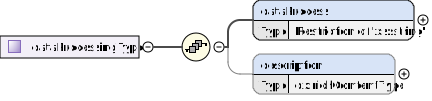
¶ Snippet from the XML schema: type definition "dataProcessingType"
<xs:complexType name="dataProcessingType">
    <xs:sequence>
        <xs:element name="dataProcess">
            <xs:simpleType>
                <xs:restriction base="xs:string">
                    <xs:enumeration value="linearisation"/>
                    <xs:enumeration value="interpolationCoefficient"/>
                    <xs:enumeration value="trendAnalysis"/>
                    <xs:enumeration value="previousCalibration"/>
                    <xs:enumeration value="other"/>
                </xs:restriction>
            </xs:simpleType>
        </xs:element>
        <xs:element name="description" type="dx:richContentType" minOccurs="0"/>
    </xs:sequence>
</xs:complexType>
¶ Description of the elements
See the list of abbreviations here
| Element (Element type) |
Use | Description |
|---|---|---|
| dcr:dataProcess (Restriction of xs:string) |
[M] | Only one of the following words can be entered in the element dcr:dataProcess. - linearisation - interpolationCoefficient - trendAnalysis - previousCalibration - other If the element is filled with another content, an error occurs during the check against the XML schema. |
| dcr:description (dx:richContentType) |
[O] | Additional information about the data process. |